How to become
a UGC creator
A practical guide for creators in Canada: what UGC is, what brands pay, how to build a portfolio, where Canadians can find paid work, and the tax and disclosure rules that apply here.
- Portfolio first, followers second
- Gifted products count as income
- GST/HST from $30,000
- #ad at the start of videos
The short answer
What a UGC creator does
A UGC creator makes short videos and photos in the style of a real customer, for a brand to use on its own channels and in its ads. The brand pays for the content and for the right to use it. The video usually goes out on the brand's account, so your skill on camera and in the edit matters more than your follower count.
That makes UGC one of the more open routes into paid creative work, and also a crowded one. In Collabstr's 2025 report, 66% of creators on the marketplace offered UGC, up from 26% the year before. This guide walks through picking a niche, building a portfolio, finding work from Canada, pricing usage rights, and the Canadian tax and disclosure rules.
Source: Net Influencer (reporting Collabstr's 2025 Influencer Marketing Report)
Two different jobs
UGC creator
- Content goes out on the brand's channels and in its ads
- Paid for the video and the right to use it
- Follower count matters mainly when you also post it yourself
- Deliverables are often several hooks, versions and raw clips
Influencer
- Content goes out on your own feed
- Paid for your audience's attention as well as the content
- Reach and engagement are what the brand is buying
- You disclose the partnership in every sponsored post
Billo, a UGC marketplace, says follower count matters only when the creator also posts the content. Some deals mix the two: a brand buys UGC and also asks you to post it as a collab or partnership ad.
What brands pay
UGC rates
Platform figures, mostly in US dollars and mostly from US brands. Use them as a rough guide, then convert to Canadian dollars.
US$177.68
Average price brands paid for UGC on Collabstr, per its 2025 report
US$75 to $150
Billo's estimate per video for beginners; US$200 to $400 standard, US$500 to $1,200+ experienced
About 80%
Of brand-reported UGC creator costs fall under US$500 per video, per Billo
About 4%
Of creators worldwide earned over US$100,000 a year, per Goldman Sachs (2023)
Collabstr also reported its average UGC price fell 44.37% year over year while more creators started offering UGC.
Billo sells UGC to brands and Collabstr is a marketplace, so their figures come from their own platforms, not an audit. Marketplace fees and currency conversion can come out of what you take home.
Source: Net Influencer (reporting Collabstr's 2025 Influencer Marketing Report)Source: BilloSource: Goldman Sachs Research
Step by step
How to start
10 steps from your first spec video to your first invoice.
1. Pick a niche you actually use
Choose one or two product categories you already buy: skincare, coffee, fitness gear, kids' products, apps. Pick products where you look and sound like the customer, and remember the Competition Bureau expects reviews to be based on actual experience.
2. Keep the kit simple
A recent phone, window light or one small light, a clip-on mic and a quiet room cover most briefs. Learn one editing app well enough to cut, caption and export vertical video cleanly.
3. Make spec videos
Film three to six videos for products you own, with no brand deal needed. Show range: a scroll-stopping hook, a product demo, talking to camera and a voiceover. Insense asks for exactly that: the ability to speak in front of the camera or voiceover, with good technical quality.
4. Build a portfolio brands can open on a phone
A Canva website, a link page or a simple site all work. Put your strongest video first, label each clip by style (unboxing, testimonial, tutorial, voiceover), and add what you offer, your turnaround, a starting rate and an email address. If you build it in Canva, publish it as a website so brands can play videos without downloading anything, and check it loads quickly on mobile data.
5. Join marketplaces that accept Canadians
Billo and Insense take creators in Canada, and TikTok told CBC News in 2024 that Creator Marketplace (now TikTok One) was open to Canadians. Each has its own rules (see below). Marketplaces bring briefs to you while you build a client list of your own.
6. Pitch brands directly
Shortlist brands whose products you use, find the marketing or partnerships contact, and send a short email: who you are, one idea for their product, a link to your portfolio and a starting rate. Offer to share a sample hook, not a free video.
7. Write a rate card
Price the video first, then price how the brand uses it. Running your video as a paid ad, from your handle (whitelisting) or forever (a buyout) is worth more than organic use. Instagram itself tells creators to ask for higher pay when a brand puts money behind their content.
8. Get every deal in writing
Deliverables, revisions, usage, ownership and payment terms belong in the contract before you film. Usage rights are where most deals get stuck.
9. Disclose when you post
If the content goes on your own account, label it clearly with #ad, at the start of a video, not only in the caption.
10. Run it like a business
Track every payment and every gifted product, keep receipts for your kit, and know when GST/HST registration applies. The tax section below has the CRA rules.
UGC jobs in Canada
Where Canadians find work
Rules from each platform's own pages, checked November 22, 2026. C-Tribe isn't affiliated with any of them.
- UGC marketplace
Billo
Open to creators physically located in the US, Canada or the UK, 18 or older (or the age of majority where you live). Payouts go through Stripe Connect, and Canadian payouts are converted from US dollars. Read the terms: deliverables are assigned to the brand in full, worldwide.
Official page - UGC and influencer marketplace
Insense
Lists Canada among its creator countries. Minimums are 1,000 Instagram followers, 500 median views on TikTok and 1% engagement. The brand's payment is held by Insense and released to your wallet after the brand approves the content.
Official page - Formerly Creator Marketplace
TikTok One
TikTok's platform for finding brand work. You must be 18 or older, TikTok One must be launched in your country or region, and projects need at least 1,000 followers. In 2024 TikTok told CBC News that Creator Marketplace was available to Canadian creators. Check TikTok Studio for what your account can join today.
Official page - Whitelisting, Meta's way
Instagram partnership ads
Partnership ads let a brand run your content as an ad to reach beyond your followers, either from a post on your account or content you share to the brand's Ads Manager. Price that usage on top of the video. Instagram Subscriptions have also been open to eligible creators in Canada since 2023.
Official page - Your own channel
YouTube Partner Program
Canada is in the expanded program: 500 subscribers, 3 public uploads in the last 90 days and either 3,000 watch hours in 12 months or 3 million Shorts views in 90 days unlocks fan funding and Shopping. Ad revenue needs 1,000 subscribers with 4,000 watch hours in 12 months, or 10 million Shorts views in 90 days.
Official page
Your rate card
Usage rights and buyouts
The base rate pays for the video. Usage is how the brand may use it, where and for how long. Billo publishes these add-on estimates as a share of the base rate:
Paid ads
The brand runs your video as an ad from its own account
+15 to 30% per 30 days
Whitelisting or partnership ads
The brand runs ads from your handle (on Instagram, a partnership ad)
+25 to 50% per 30 days
12-month usage
The brand can keep using the content for a year
+70 to 100%
Perpetual buyout
The brand can use it forever
+150 to 300%
Estimates from Billo, a company that sells UGC to brands; figures in USD.
Contracts
What to put in writing
In a 2026 IAB survey of US industry leaders, usage rights were the top friction clause, named by 61%, ahead of exclusivity (48%). IAB calls its figures directional.
Deliverables
How many videos, how long, how many hooks or versions, whether raw clips are included, file formats and the deadline.
Revisions
How many rounds, and what counts as a revision versus a new brief.
Usage
Organic, paid ads or whitelisting; for how long; in which countries. Anything beyond the agreed scope is a new fee.
Ownership
A licence lets the brand use your work on set terms. An assignment hands it over for good. Billo's creator terms, for example, irrevocably assign all rights in your deliverables to the brand worldwide.
Exclusivity
If a brand asks you not to work with competitors, define the category and the time period, and charge for it.
Payment
Amount, currency, deposit and due date. 60% of the IAB's respondents said long payment terms cause harm down the line. Escrow, as Insense uses, protects both sides.
Disclosure and tax
Who labels what if you post it, and GST/HST on top of your fee if you're registered.
This is general information, not legal advice. For a large or long deal, have a lawyer read the contract.
Taxes in Canada
What the CRA expects
All of it counts, gifts too
If you live in Canada, report all income from your content, money and non-monetary, earned in Canada and abroad. The CRA's own example is an influencer who had to report a free vacation valued at $5,000. Free products you're sent to feature count too.
Self-employment: Form T2125
The CRA treats income from social media platforms as self-employment income. Report it on Form T2125, Statement of Business or Professional Activities, so it's reflected on line 26000 of your return.
Keep records
Track income and expenses, including sales to buyers in Canada and other countries. Keep receipts for gear, software and other costs you claim.
GST/HST at $30,000
You're a small supplier until your taxable supplies pass $30,000 over four consecutive calendar quarters. Past that, register, charge and remit GST/HST. Passing $30,000 in a single quarter means registering right away. You can also register voluntarily before then.
Rates depend on the province
Alberta charges 5% GST only; HST provinces charge more. Whether GST/HST applies to work for a brand outside Canada is a separate rule, so check with the CRA or an accountant before you invoice a foreign client.
Thresholds and rates as the CRA states them on its pages (checked November 22, 2026). This is general information, not tax advice.
Disclosure rules
#ad, done right
Canada's rules come from the Competition Bureau and Ad Standards, not the US FTC.
Gifts are a material connection
Payment, free products with or without conditions, discounts and gifts all count, as do personal or family ties to the brand. If any of these exist, disclose.
Use #ad on its own
Ad Standards calls #ad, on its own and not combined with other words, the gold standard. #sponsored, #Gifted and #XYZPartner are recognised too. It calls #Ambassador, #Partner, #Spon, #PR, #Promo and #Collab ambiguous.
Say it at the start of a video
Disclose prominently at the beginning of a video. A disclosure only in the caption is not enough, and neither is a line in your bio. Disclose in each post, where people will see it.
Match the language
If the content and captions are in French, disclose in French.
Label AI-altered product images
If AI generated or significantly altered an image showing what a product does, disclose it, for example with #MadeWithAI or #AIcreated. A label cannot fix a misleading image.
Platform labels can count
A built-in paid partnership label is enough when it is prominent and clear, but disclosure stays your responsibility.
Ad Standards puts the duty to disclose on everyone in the deal: brand, agency and creator. Its guidelines have no section just for UGC. When a brand posts your video on its own account it is the brand's ad; when it appears on your account, as a collab or partnership ad, label it yourself.
TikTok Creator Fund
Getting paid by TikTok in Canada
Many people still search for the TikTok Creator Fund. The program CBC News reported on in June 2024 is TikTok's Creator Rewards Program, and at that time Canada was not one of the countries that qualified. It was open in the US, UK, Germany, Japan, South Korea, France and Brazil, for creators 18 or older with at least 10,000 followers and 100,000 views in the last 30 days.
TikTok pointed Canadian creators to Creative Exchange, which connects creators with advertisers to make TikTok ad campaigns, and Creator Marketplace (now TikTok One), which connects them with brands.
In March 2026 Ottawa dropped its TikTok ban and let the platform stay in Canada with conditions, and TikTok Canada said it looks forward to investing in programs that support Canadian creators. Programs change: open TikTok Studio to see what your account can join today.
Sources: CBC News, Can you get paid for posting on TikTok? Not in Canada; BNN Bloomberg (The Canadian Press), Ottawa drops TikTok ban, will now let platform stay in Canada with conditions.
Funding
Money for creators in Canada
Funding is thin. In a 2026 YouTube and Abacus Data survey of 2,596 Canadian YouTube creators, only 8% had access to business loans or institutional credit.
- Canada Media Fund
Digital Creators Pilot Program
Who it's for: Mid-career Canadian creators making short-form video for YouTube, Instagram, TikTok or Facebook; from 2026-27, also podcasters moving into video.
The 2026-27 intake opened September 15 and closed October 1, 2026. The next intake had not been announced when we checked, so watch the CMF page.
Official page - Canada Media Fund
Program for Black and Racialized Communities
Who it's for: Production companies owned and controlled by Black and Racialized persons, for audiovisual projects (documentary, drama, children's and youth).
In 2026-27 the CMF put $10,160,000 into 19 projects. This is screen production funding, not a fund for short-form creators.
Official page - YouTube
YouTube fan funding
Who it's for: Channels in the expanded YouTube Partner Program (500 subscribers and the watch-time or Shorts threshold).
Unlocks memberships, Super Chat, Super Thanks and Shopping, so fans can pay you directly.
Official page
Canadian Heritage's Changing Narratives Fund, delivered in part through the CMF, ends on March 31, 2027 and will not be renewed, so don't plan a 2027 project around it.
Source: Canadian HeritageSource: YouTube Canada and Abacus Data
C-Tribe Festival & Conference · August 12-17, 2027
Creators at C-Tribe
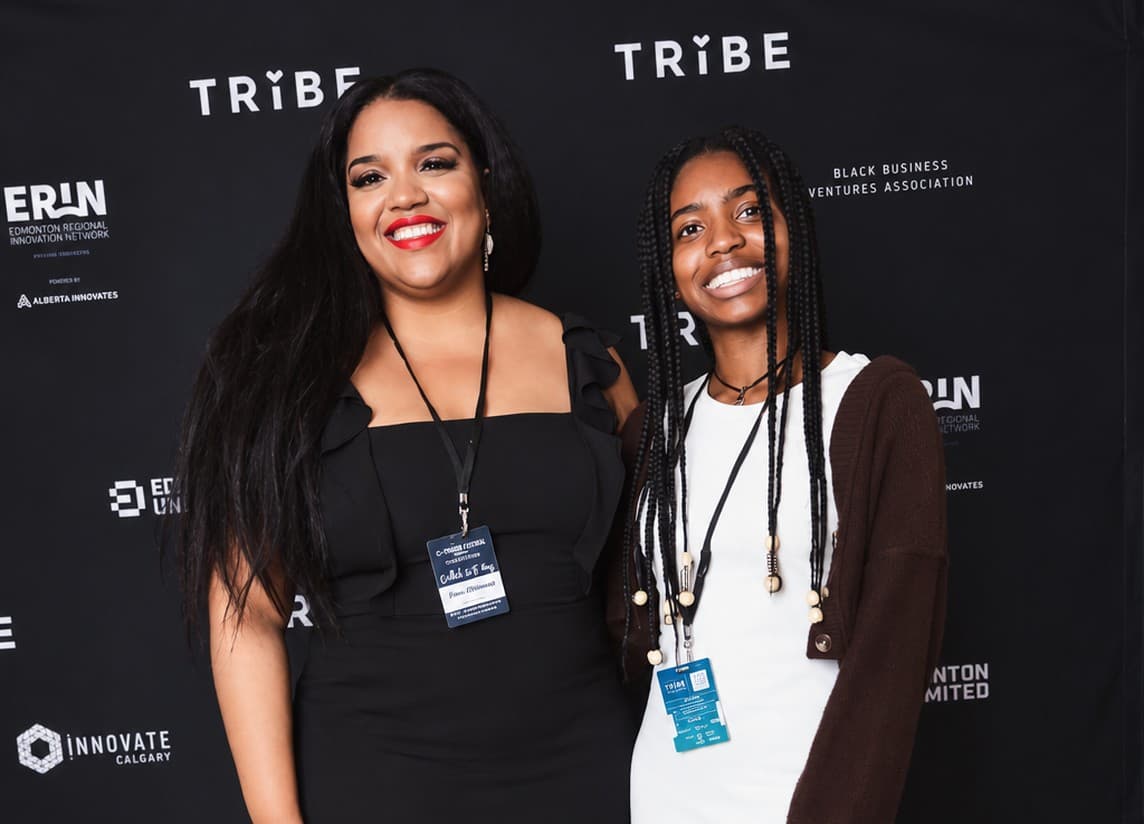
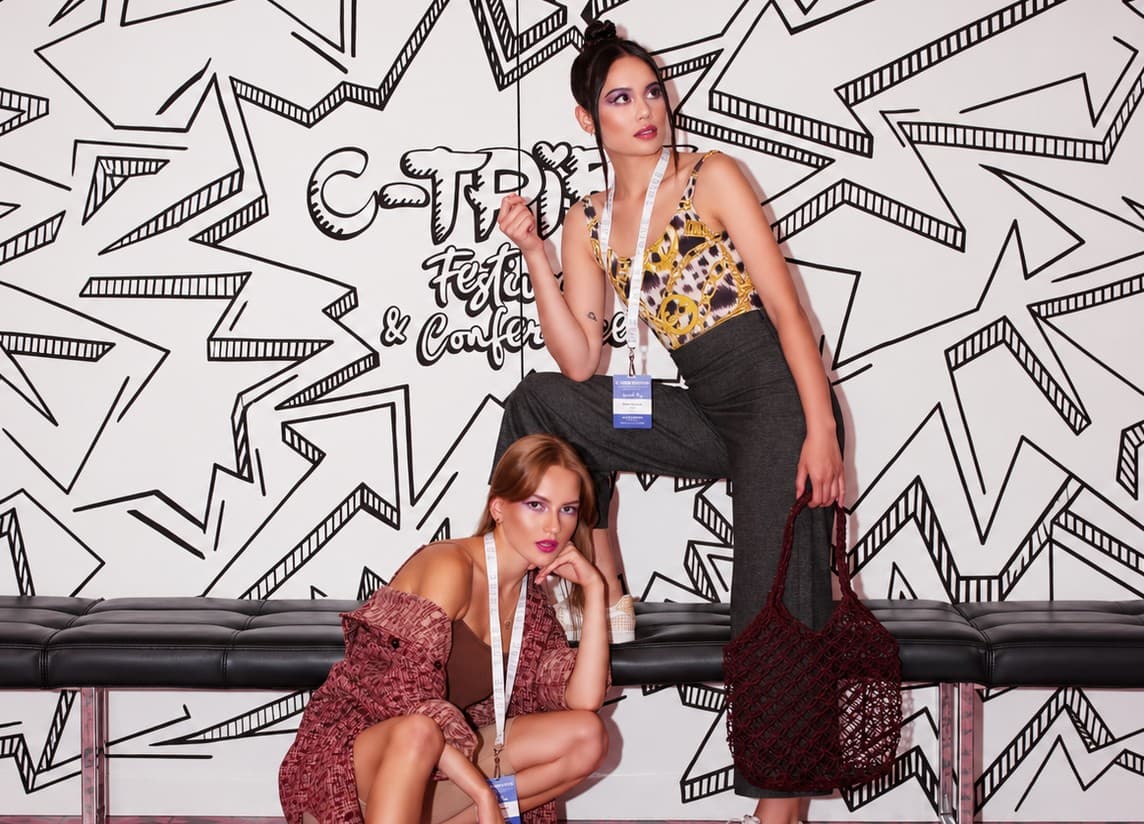
In 2024, 31 influencers and content creators took part in C-Tribe Festival in Edmonton, up from none the year before.
For 2027, the Creator Economy track brings UGC, brand deals and the business of creating into one program across all six verticals. Formats are planned and are announced as they're confirmed.
The Creator Economy track
Build an audience, earn from your content and run your creative work as a business across platforms.
See the trackApply as a creator
Tell us about your channels and what you'd make at the festival.
Creator applicationDiversity Pass
Free festival access for people from underestimated communities. 450+ were given out in 2024.
About the Diversity Pass
FAQ
UGC in Canada
What is a UGC creator?
Do I need followers to become a UGC creator?
How much do UGC creators make?
Is the TikTok Creator Fund available in Canada?
Do I pay tax on free products I get as a creator?
When do I need to register for GST/HST?
Do I have to put #ad on UGC?
What is whitelisting in UGC?
Where can I find UGC jobs in Canada?
Does the Online Streaming Act apply to creators?
Create with us
C-Tribe Festival & Conference runs August 12-17, 2027 in Edmonton. Apply as a creator, or see what the Creator Economy track has planned.
Sources
- Net Influencer (reporting Collabstr's 2025 Influencer Marketing Report), Influencer collab costs in decline, but UGC offers bright spot in 2025, report finds (2025-02-06)
- Billo, UGC Rates in 2025: What Brands Actually Pay (and Why It Varies) (2026-11-10)
- Goldman Sachs Research, The creator economy could approach half-a-trillion dollars by 2027 (2023-04-19)
- Competition Bureau Canada, The Deceptive Marketing Practices Digest, Volume 4 (2018-06-05)
- Insense, For creators (2026-11-22)
- Billo, Terms of Service for Creators (2026-11-12)
- CBC News, Can you get paid for posting on TikTok? Not in Canada (2024-06-16)
- Instagram for Creators, Partnership ads (2026-11-22)
- IAB (US), The Creator Economy's Next Chapter (2026-11)
- Ad Standards, Influencer Marketing Disclosure Guidelines (Fall 2025 update) (2025-10-08)
- Canada Revenue Agency, Social media influencers (2025-01-31)
- TikTok Ads Help Center, How creators can sign up for TikTok One (2026-11-22)
- Instagram, Subscriptions on Instagram: recurring monthly income for creators (2023-07-24)
- YouTube Help, Overview of the expanded YouTube Partner Program (2026-11-22)
- YouTube Help, YouTube Partner Program overview and eligibility (2026-11-22)
- Canada Revenue Agency, When to register for and start charging the GST/HST (2026-06-16)
- Canada Revenue Agency, GST/HST calculator (and rates) (2025-04-01)
- BNN Bloomberg (The Canadian Press), Ottawa drops TikTok ban, will now let platform stay in Canada with conditions (2026-03-10)
- Canada Media Fund, Digital Creators Pilot Program (2026)
- Canada Media Fund, CMF to invest $10M in 19 projects led by Black, Racialized creators (2026-08-13)
- Canadian Heritage, Changing Narratives Fund (2026-04-08)
- YouTube Canada and Abacus Data, Canada's Creator Consultation (2026)
- Justice Laws Website, Online Streaming Act, S.C. 2023, c. 8 (2023-04-27)
Every figure was checked on the publisher's page on November 22, 2026. Rates from Collabstr and Billo are platform data in US dollars. C-Tribe photos are our own.